ERP.Production – Version for the Fishery and Fish Processing Industry
The ERP.Production solution allows to plan, control, analyze and
manage production processes of industrial enterprises.
Production processes even in one
industry differ greatly depending on the manufactured products.
Products are usually diverse in kinds and types and, moreover, often
go through a number of stages during the life cycle, therefore the
enterprise requires different management models. Support of the full
product life cycle is carried out from production to sale or
write-off.
Volume-calendar planning based on
requests makes it possible to plan production and form plans based on
existing sales orders and availability of critical components
(materials) and production equipment.
Material requirements planning
allows, when launching a request into work, to calculate the needs
for all materials and raw materials, taking into account warehouse
stocks, planned receipts and shipments. The named needs arise on the
basis of sales orders, shop orders, work orders (repairs). This
information is compared with unreserved stocks, supply orders and
shop orders to determine the need for raw materials and components.
The task of capacity
requirements planning consists in determining the real сроки of
execution of the production program on the available production
capacities. Planning the load of work centers facilitates the process
of determining possible bottlenecks and allows smoothing underload
and overload of production capacities and personnel.
One of the results of the module
operation are the requests generated by the system for creation of
shop orders and supply orders. Orders are created on the basis of
acceptance or adjustment of requests.
Work instructions (technical
conditions for performing operations) for execution of the order can
be added to a shop order, as well as components can be added or
excluded.
Informational messages about the
threat of overdue delivery date of a sales order due to delays in
supply and execution of shop orders are provided.
Product cost control.
Standard cost (standart
costing). When calculating it, they are guided by the provisions that
planned values are based on the forecast, direct variable costs are
planned by product types, other costs by cost centers. Cost
calculation is performed for a standard batch size or production
cycle.
Process cost (activity based
costing) - unlike standard cost, uses the parameters of the process
of creating added value as a result of consumption of various
resources. For non-standard products, for which production
preparation, design and technological elaboration, several cycles of
equipment setup may be required, it is possible to define the listed
processes as sources of process costs.
The possibility of combining
standard and process cost in one hybrid cost model is provided.
Calculations according to the above cost models are carried out on
the basis of summing cost elements and take into account the data of
the specification and technological route, as well as the
technological process. The calculation contains estimates of costs of
this level of production and all lower ones down to purchased
components and raw materials.
The current calculation of
production costs by order reflects the registered volume of work in
progress by order. On its basis, the current production situation can
be analyzed and corrected based on the analysis of reasons for
deviations from the preliminary cost calculation. Operational
functional cost analysis of production makes it possible to quickly
see where deviations begin.
Analysis of the operation of
production with a wide assortment of goods and large turnover is very
difficult and requires a large amount of time. Correctly setting
priorities is helped by the ABC-analysis method ( Activity-Based
Costing ), with the help of which it is possible to immediately
identify that group of 20 percent of goods that bring 40 percent of
income, and to identify those 10 percent of goods that bring 5
percent of income and take away 25 percent of production capacities.
Brief list of capabilities of
the ERP.Production module
• Production output planning
-
using graphical tools to
optimize the loading of production capacities,
-
with creation of a list of
necessary components,
-
with creation of a list of
performed works and necessary human resources,
• Control over the production
process by sections by:
-
movement of components by
performed orders using multi-level analysis by types and names,
-
components consumed for
production, with analytics of planned and actually spent funds,
both by period and cumulatively,
-
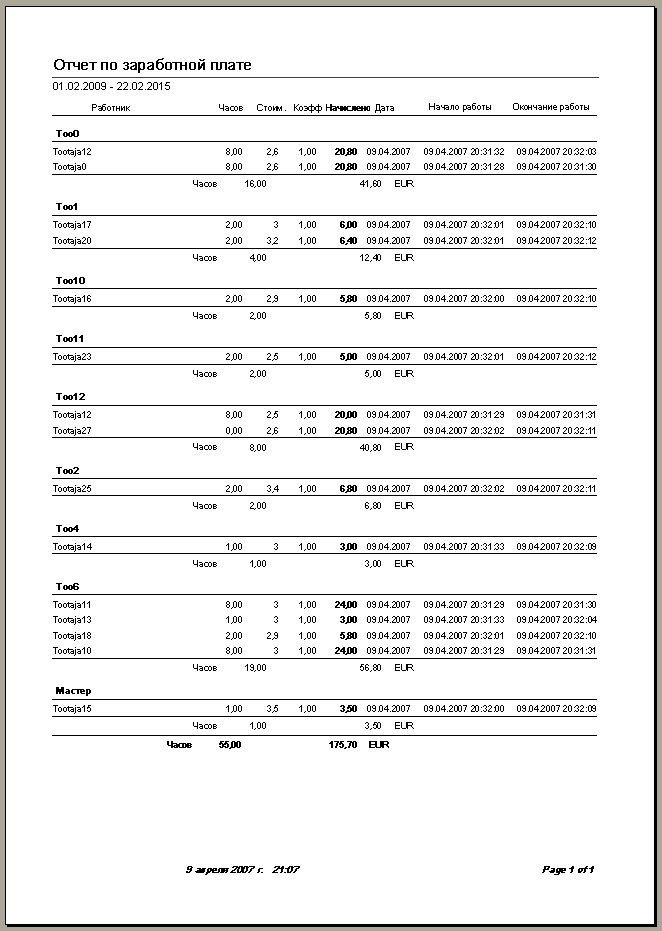
wages, including piecework
or time-based wage calculation, with analytics of planned and
actually spent time and funds, both by period and cumulatively,
-
analytics of obtained
products ( defects, returns to production, rejection ).
-
constant expenses for
activity ( rents, leasings and so on ), with analytics of planned
and actually spent funds, both by period and cumulatively,
-
taxes, with analytics of
planned and actually spent funds, both by period and
cumulatively,
-
issued invoices and their
payment;
• The obtained data have
possibilities:
-
analysis of the production
cycle for any period, as well as step-by-step and by-order, with
obtaining results for a certain date, with analysis of cost and
prime cost,
-
analysis of several forms of
activity,
-
analysis of sub- or general
contracts, with analytics of planned and actually spent funds,
both by period and cumulatively, of deadlines for execution of
works;
• Possibility to оперативно
assess the economic condition of the enterprise, the economic benefit
from a specific executed order or form of activity of the enterprise;
• Archive of all documentation
without limitation of their storage period;
• Fast finding in the archive of
information by various attributes (order number, job order,
configuration, client, invoice number and so on) ;
Interaction of WMS.Management
and ERP.Production is built on the principle of their full
integration, in particular , when issuing finished products from
production, the corresponding warehouse receipt document is
automatically created, when issuing raw materials to production, the
corresponding document on acceptance of raw materials into production
is automatically created. For transferring requests for production
and internal issue within the enterprise, an internal document
transfer system with sound notification, with analysis of execution
and with control of unfulfilled orders is used.
The delivery set includes
adaptation to the conditions and needs of a specific enterprise,
installation, setup and full staff training with subsequent 1 year of
software support.
The cost of the software complex
is determined individually for each company, depending on the volume
of adaptation works and the number of workplaces, the required
composition of the complex.
If the client wishes, we will
develop a full or limited web interface, using modern web
technologies. More detailed information is at the link Application in
production and warehouse complexes.
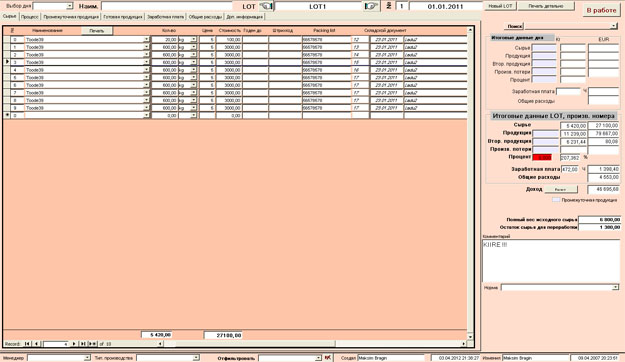
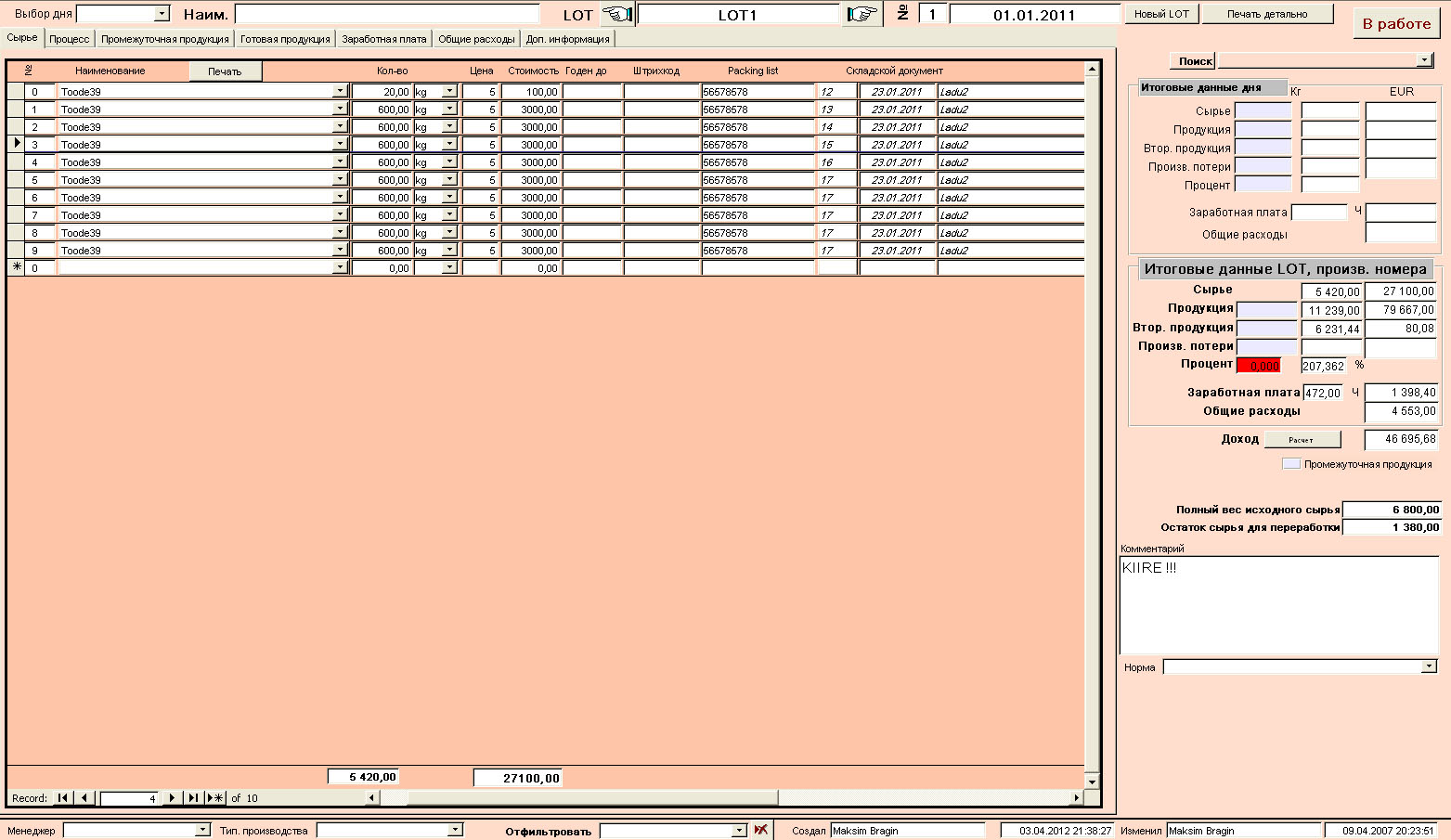
Form for entering raw materials into the technological
process. In the left part of the form, the warehouse document is
visible, according to which the raw materials were issued to production,
with the possibility of quick переход to it by double click. In the
right part, at any moment of work with the production module, the main
parameters of the production cycle are shown.
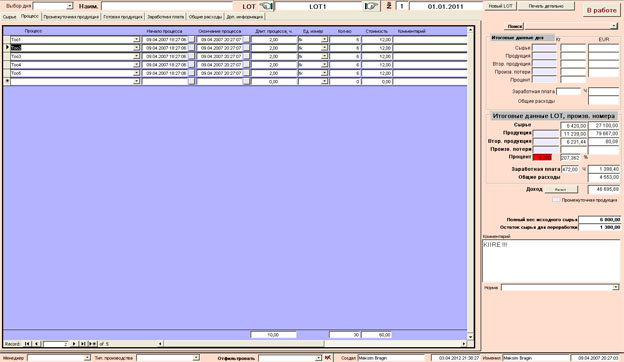
Form for entering data on the technological process.
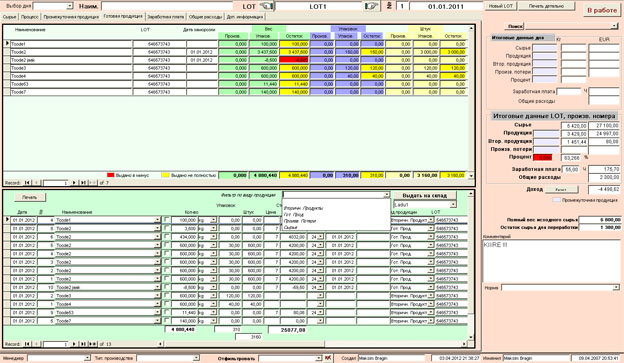
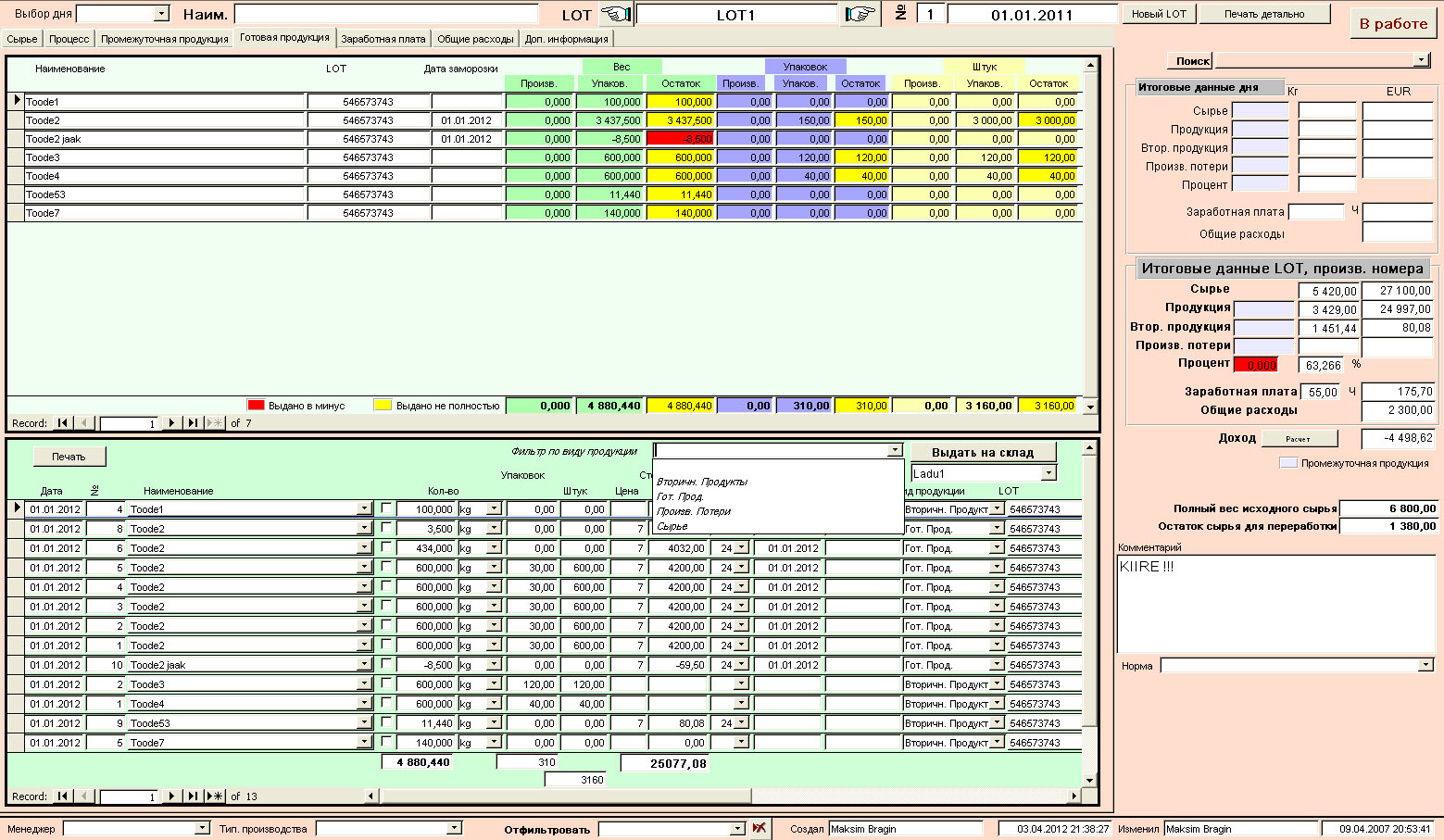
Form for forming packaged finished products. By the
"Issue to warehouse" button, automatic issuing of finished products to
the production warehouse or to the trading warehouse is performed. In
the right part of the form, the warehouse document is visible, according
to which the finished products were issued, with the possibility of
quick переход to it by double click.
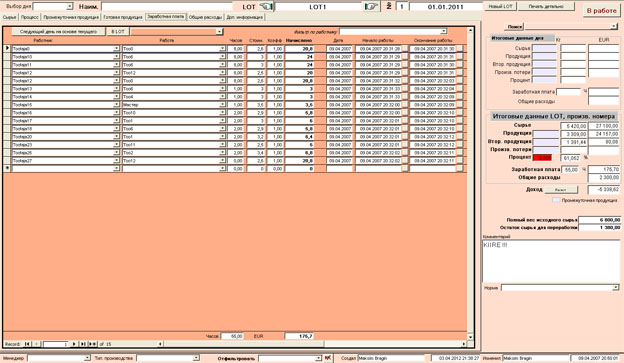
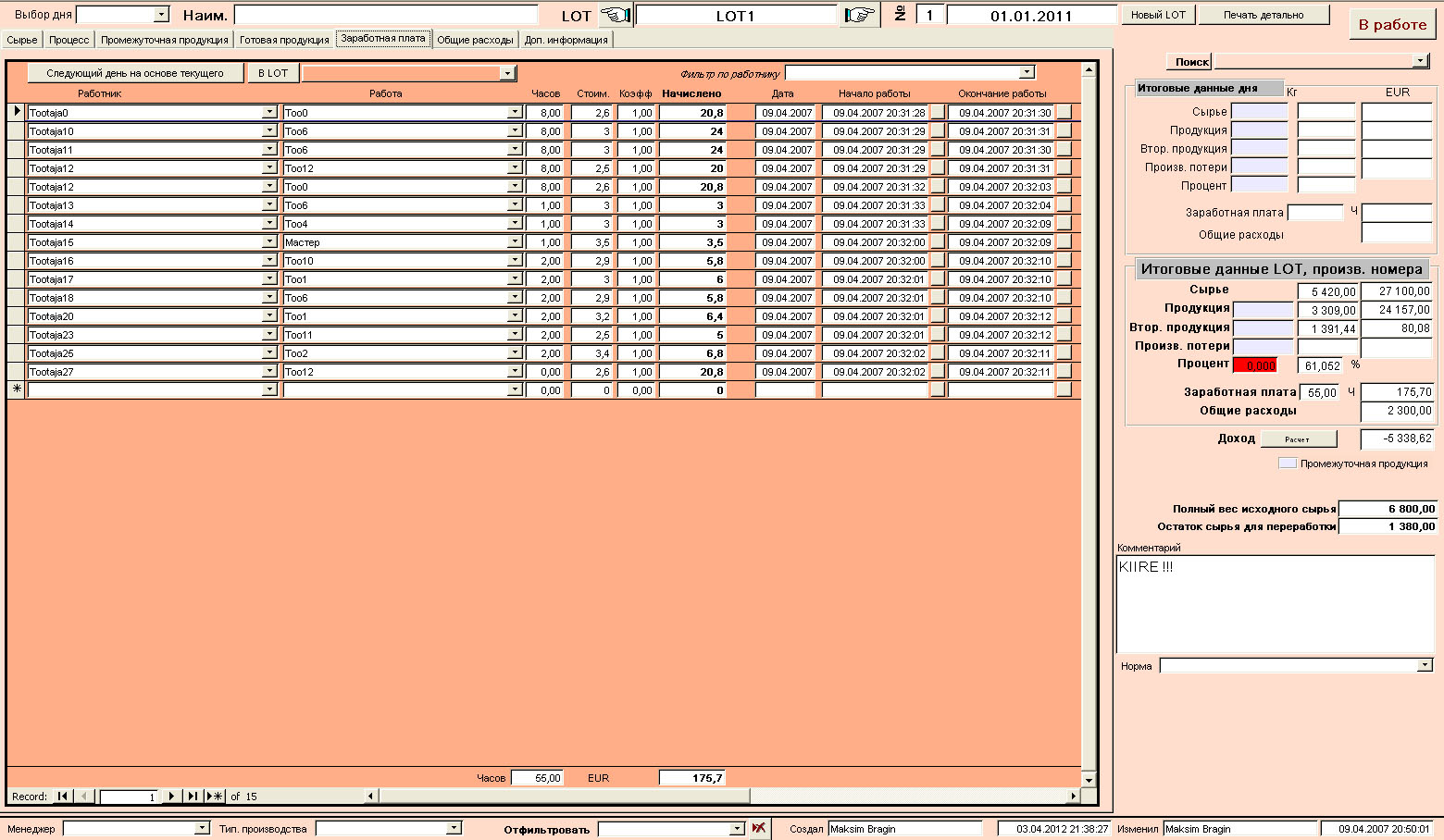
Form for entering wage data into the technological
process.
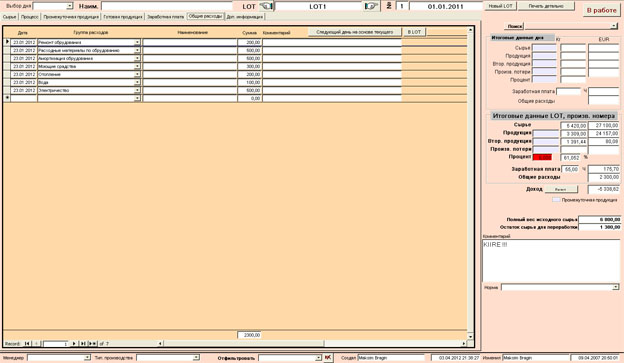
Form for entering general expenses into the
technological process.
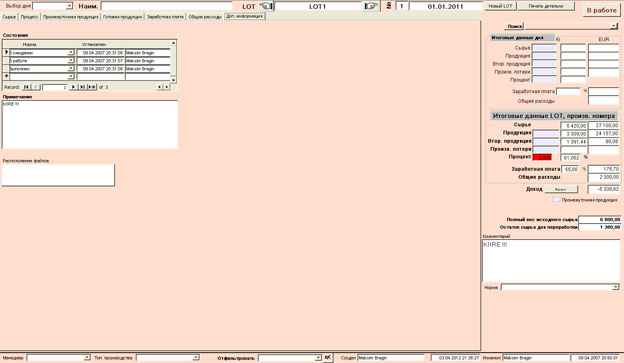
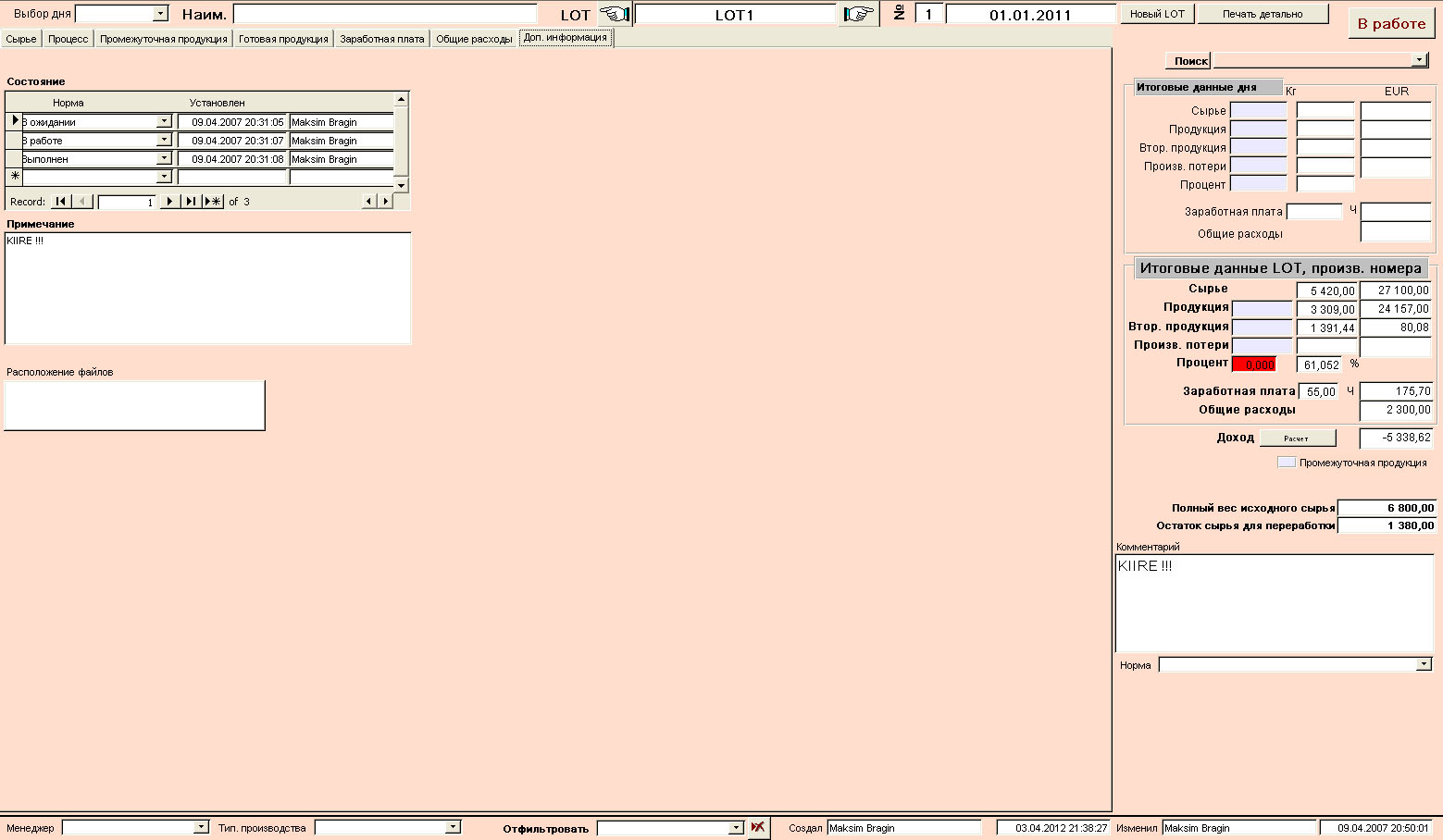
Form for entering additional information into the
technological process.
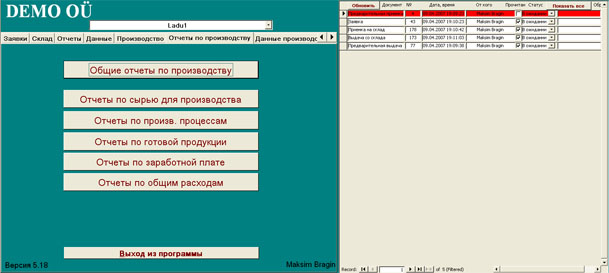
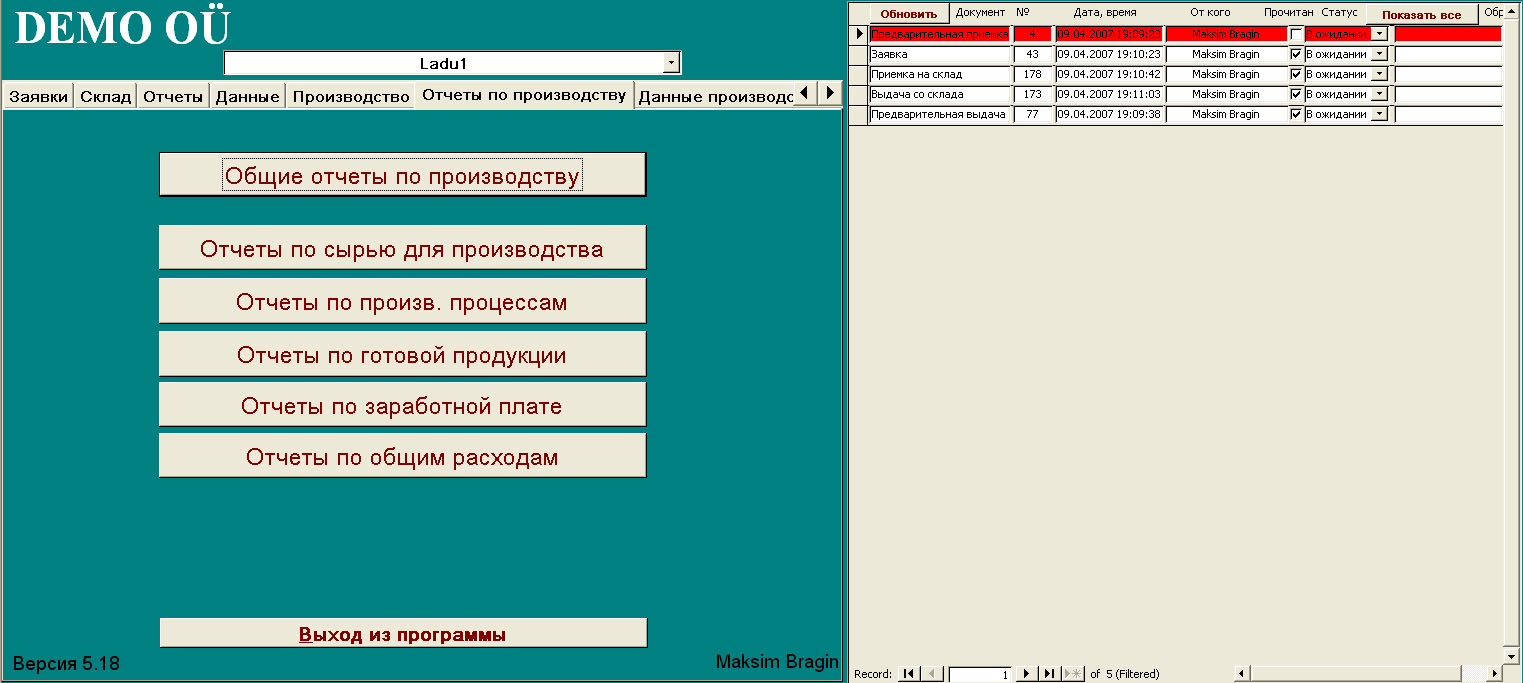
Production reporting form.
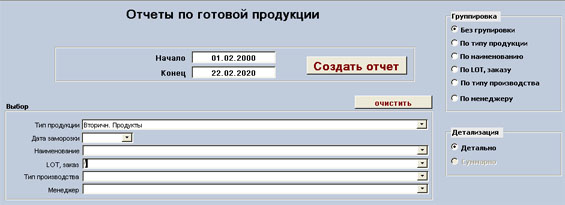
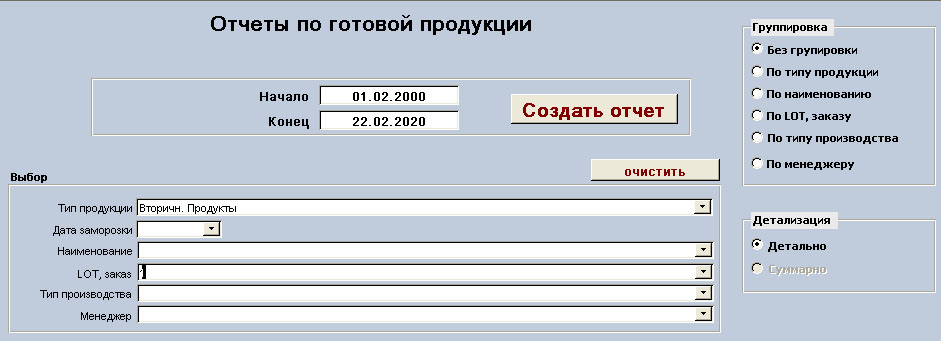
Query form for finished products.
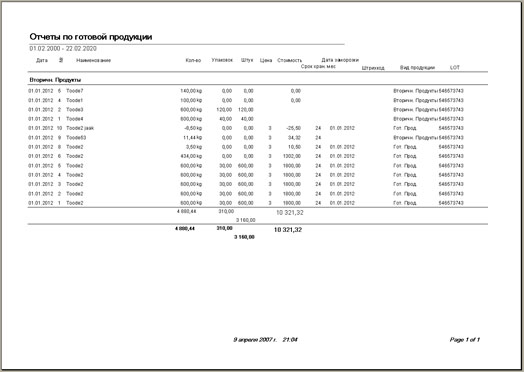
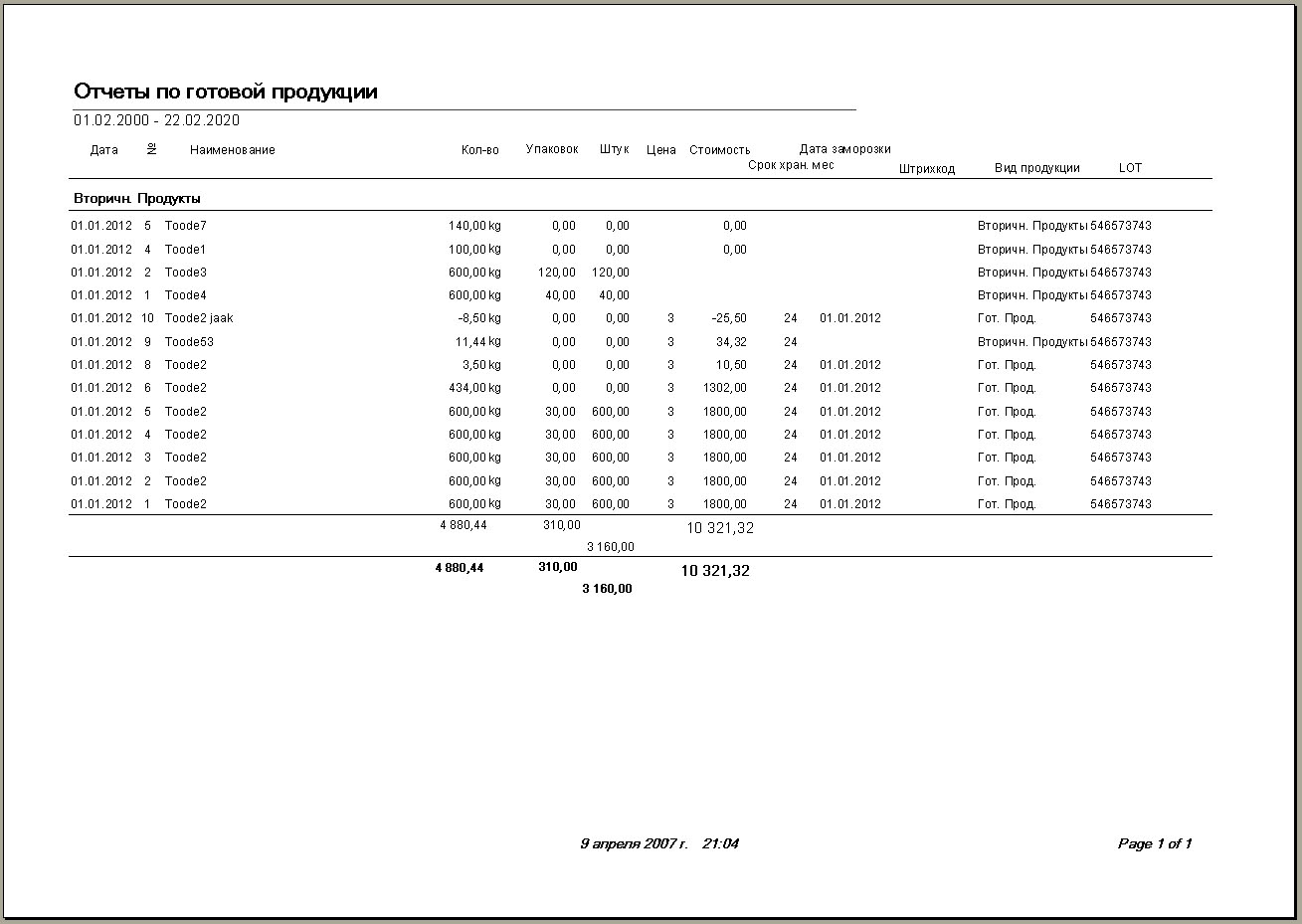
One of the variants of the finished products report.
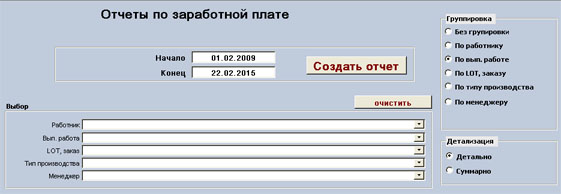
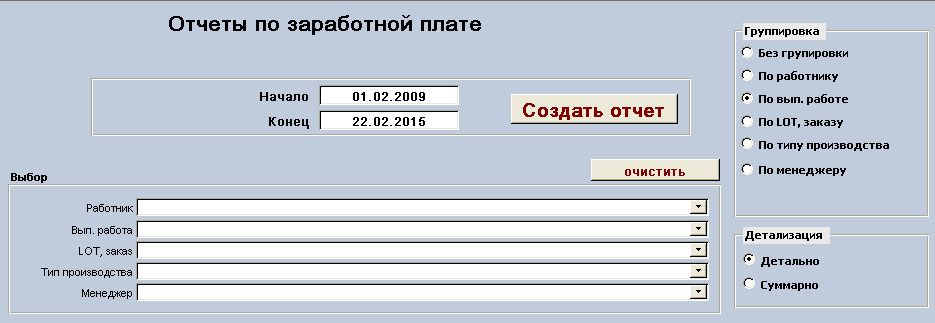
Query form for wages.
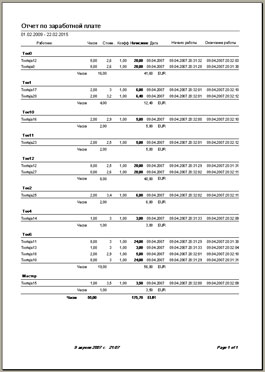
NB ! All
data given in the demonstration forms are fictitious and any
coincidences are accidental.
The software
is developed using Microsoft Access and Microsoft SQL Server.